



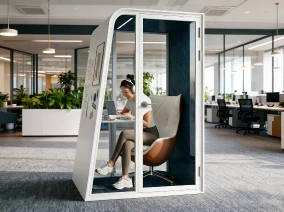
How to Choose the Right Office Pod for Your Workplace?
Release time: 2026-10-15
An office pod can create a private place for calls, video meetings, and focused work. However, choosing the right pod takes more than checking its size or price. You should also review soundproofing, ventilation, delivery, safety, layout, and long-term operating costs. Use the following checklist to choose a comfortable and practical office pod for your team.
1. Define the Use and Capacity
Start by identifying how people will use the office pod. Common uses include phone calls, video meetings, private conversations, and deep work. The use case will help you decide whether you need a phone booth, a meeting pod, or a focus pod.
Do not choose a pod only because the product is labeled a “one-person pod.” Some small pods have a floor area of about one square meter. They may be suitable for standing calls, but they may not be comfortable for long periods of work. Measure the interior space, desk size, seat position, and legroom before you buy.
Also consider how long employees will stay inside the pod. A pod for short calls can be smaller. A pod for deep work needs more space, better lighting, and a comfortable desk and chair. The right office pod should support the real work people need to do.
2. Check the Real Soundproofing Performance
Soundproofing is one of the main reasons to buy an office pod. Do not judge a product only by its claimed STC, or Sound Transmission Class, rating. A good rating does not always mean good speech privacy in a real open office.
Check the door seals, glass panels, ventilation openings, and joints between wall panels. These areas can become weak points. A poorly sealed door or a noisy ventilation system can reduce the value of a soundproof office pod, even when the product has a high STC rating.
Before placing an order, ask the supplier for an on-site test video or a live demonstration. Test the pod in an open office environment if possible. Pay attention to both sound isolation and speech privacy. The goal is not only to reduce noise. It is also to make private conversations difficult for people outside the pod to understand.
3. Plan Delivery, Transport, and Installation
Large office pods can weigh several hundred kilograms or more. Moving them into the building can be a serious challenge. Many buyers focus on the product itself and forget to check the delivery route.
Before you order, measure every part of the route. Check doors, corridors, stairs, elevators, loading areas, and turning spaces. You should also check the floor load capacity. Share these measurements with the supplier before production or shipment starts.
Clarify the delivery terms in writing. Confirm whether the price includes door-to-door delivery, unloading, internal transport, assembly, electrical work, and final installation. A product with a removable or modular design can make delivery easier. A supplier that provides full installation service can also reduce delays and unexpected renovation costs.
4. Make Ventilation and Comfort a Priority
A good ventilation system is essential for an enclosed office pod. People need a continuous supply of fresh air when they work inside. Poor ventilation can make the pod feel hot, stuffy, and tiring.
When comparing products, check the capacity of the air exchange system and its operating noise. The ventilation fan should provide enough fresh air without becoming a new source of distraction. If the pod supports heating and cooling, check how the system works in different seasons.
You should also confirm the position and number of power outlets, USB ports, lights, and control switches. Lighting should support both video calls and focused work. Insufficient ventilation or poor lighting can reduce employee comfort and lower the actual use rate of the office pod.
5. Review Safety, Compliance, and Total Cost
Before buying an acoustic office pod, confirm that it meets the safety and environmental requirements in your market. Ask for documentation related to fire safety, electrical safety, material emissions, and other applicable standards. A complete warranty and after-sales service plan is also important.
Do not compare products by unit price alone. The real purchase cost may include shipping, taxes, unloading, installation, electrical work, and site changes. Ask suppliers to provide a complete quote with every cost listed clearly.
Long-term costs matter too. Include electricity, filters or other consumables, cleaning, repairs, and maintenance in your budget. A short trial or small pilot project can help you test employee acceptance before you equip the whole office.
6. Plan the Office Layout and Future Flexibility
An office pod should be part of the overall workplace plan. Avoid placing pods wherever there is empty space. Consider office traffic, noise sources, emergency routes, natural light, and access to power.
In some offices, placing a pod near a printer area, corridor, or other noise source can improve the value of the quieter work zones. In other cases, a central position may make the pod easier for more employees to use. The best location depends on the office layout and the main purpose of the pod.
Leave enough space around the pod for safe movement and future changes. A flexible layout makes it easier to add, move, or remove pods as team size and work patterns change.
7. Use Data to Manage a Smart Office Pod
If you choose a smart office pod, built-in sensors and booking software can provide useful data. You may be able to track booking frequency, actual use, peak hours, and average session length.
This information can support future decisions. For example, low use may show that the pod is in the wrong location or does not meet employee needs. High demand may show that the office needs more capacity. Usage data can help you evaluate return on investment and use the available space more effectively.
Data should support workplace decisions, not replace employee feedback. Combine usage reports with regular feedback about comfort, privacy, noise, and ease of booking.
Conclusion: Choose an Office Pod Based on Real Needs
The office pod market has developed quickly over the past decade. It has moved from an emerging concept to a common solution for open-plan workplaces. Improvements in acoustic materials and smart systems, pressure to control office rent, flexible work models, and growing demand for privacy all support this development.
Different products will follow different paths. Some will focus on smart, integrated features. Others will aim for wider adoption and stable growth. Some may need to adapt as new workplace technologies appear. Office pods will continue to play a role in the development of modern workspaces.
For business buyers, the key is to define the need first. Then review the product, test the soundproofing, plan the layout, and calculate the full cost. Continue to check performance after installation and improve the setup when needed. An office pod can offer a practical way to balance open collaboration with privacy and focused work.
A Final Reflection: Technology and Human-Centered Design
The popularity of office pods may also show that many modern workplaces still struggle with noise, interruptions, and a lack of privacy. An office pod can help, but it is not a complete answer to every workplace problem.
Good workplace design should give people a quiet place to focus, the freedom to choose how they work, and a sense of respect and trust. It should also help people live and work comfortably within the space around them.
The best office pod is not simply a soundproof box. The best solution is a workplace where people have enough choice and privacy that they do not always need a pod. Reaching that goal requires more than product innovation. It also requires thoughtful planning and a deeper understanding of how people work.

